I have increased my walking in the last couple of weeks from 1.5 miles to around 3.5 miles almost every day. I have also been slowly adding back in squats with two 20 lb dumb bells followed up by pumping them together overhead. I have to make sure I do double sets of yoga type back bends (my chiropractor calls them McKenzie movements or push backs) for the lower back. This is because of the L4, L5, S1 problem I had 3 years ago and I do not want it back. For some reason the squats with the weights seem to have a fairly dramatic effect on BG levels.
What about the fast paced "interval walking" sessions?
I am going to post a LINK at the end of this post on guidelines for those beginning a walking program to help combat Type 2 diabetes and just because if is good for your overall health and well being. The article is based on a study outlined in Diabetes Care magazine and is quite informative.
The study indicated significant health gains from an increase in exercise as follows:
EXCERPT:
The authors found significant health benefits with increases in physical activity of >10 MET h/week, and they suggest that this is the minimum increase in physical activity required to achieve health and financial benefits in sedentary patients with type 2 diabetes. Further, they found that the health benefits of physical activity continued to increase as physical activity increased up to a maximum of 21–30 MET h/week. Thus, they recommend 27 MET h/week as a good target for sedentary patients with type 2 diabetes.
So what is a 10MET h/week? Good question.
The article is geared towards INCREASING your present level of activity by at least 1.2 miles a day. In other words if you are already walking 1.2 miles, you are encouraged to double that to 2.4 miles a day. I would encourage you to also try the interval walking where once each time around your high school or college track you walk half of it at a very FAST pace or walk one time around at your normal brisk pace and the next one as FAST as you can possibly walk it. This will increase your metabolism and for the guys BOOST your testosterone production.
EXCERPT:
A good starting target for your patients is to increase walking by at least 1.2 miles/day or 30 min or 2,400 steps/day. Keep in mind that these recommendations are increases over the present level of walking and are a very achievable increase for most people. Greater health benefits will accrue with more physical activity, and ideally you can help your patients continue to increase toward a more optimal goal of 3.2 miles or 77 min or 6,400 steps or even more. It makes sense to start with small changes. It might be hard to get an initial increase of 3.2 miles/day in many of your patients, but most could add an extra 1.2 miles, especially considering they do not have to do it all at once and can accumulate this over the day.
If you don't like charts and all of that, increasing your number of steps by 2000 a day is a great place to start. Remember MOST of the population whether diabetic or not do not get anywhere close to the amount of aerobic exercise they need to stay healthy.
Here is the LINK:
http://care.diabetesjournals.org/content/28/6/1524.full
Dan
Those who think they have not time for bodily exercise will sooner or later have to find time for illness. ~Edward Stanley
Showing posts with label Exercising For Diabetes. Show all posts
Showing posts with label Exercising For Diabetes. Show all posts
Tuesday, June 25, 2013


Monday, May 20, 2013
Testosterone Boosting Exercise
I came across this website today and thought I would pass this one while my mind is on boosting my own testosterone. Being 65 years old and NO spotters at home to work out with and to top things off a guy who suffered from an L4,L5 and S1 back problem three years ago, I am HESITANT to dive into HEAVY LIFTING EXERCISES to try and boost testosterone. You older guys can relate to this.
I spent around 6 or 7 months three years ago in a LOT of pain and Praise the Lord, I avoided back surgery. I did end up after a lot of prayers, trips to the chiropractor and the physical therapist having two nerve block shots with a hydroscopic needle which miraculously took away my pain and it has never come back. I thank the good Lord above for that. Since then I am faithful in doing stretching exercise and abdominal strengthening exercises every day.
I am going to post a link here which shows 6 of the best exercises you can do to boost testosterone. Remember there is a link between type 2 diabetes, heart disease and LOW testosterone. It isn't all about your libido.
One thing that interested me on this site was the concept of SPRINTING for short bursts during your walk or normal run if that is part of your regimen. INTENSE short bursts of sprinting or I would also presume INTENSE BURSTS OF WALKING AS FAST AS YOUR LEGS WILL CARRY YOU FOR 10-20 SECONDS AT A TIME can prove very beneficial.
I have started doing the "Interval Fast Walking" routine when I walk. I am a little leery of even taking up the running and sprinting again because of the previous bout of back problems. If L4, L5 and S1 bring back memories for you, you will not want to go there again if possible.
IF you can handle the stress on your back and your system and want fast results, then you can follow this guys advice to the letter. If you are gun shy of jumping in head first, then work your way into it and perhaps substitute the fast/normal interval walking in place of SPRINTING. In my case adding the Testofen supplements will be a bonus.
Dan
In any event here is the link:
http://getfitguy.quickanddirtytips.com/6-ways-to-increase-testosterone-with-exercise.aspx
EXCERPTS:
 by Ben Greenfield
Testosterone is a steroid hormone that helps you increase lean muscle mass and bone density – and beyond simply helping you have a nice body, it’s also crucial for good health! Low levels of testosterone, in both men and women, can lead to a number of serious health conditions, including increased risk of depression, low sex drive, obesity, and osteoporosis.
Men with low testosterone tend to have higher rates of heart disease, depression, and even dementia – and a decrease in testosterone levels in women can lead to a loss of muscle mass and weight gain (especially when paired with the rising levels of estrogen that you learned about in my episode onHormonal Imbalances and Weight Gain).
Although there are entire industries built up around herbal and pharmaceutical pills, capsules, lotions, injections, super foods, and other methods for increasing testosterone, in this episode you’re going to get 6 simple strategies for increasing testosterone without actually swallowing any questionable supplements.
6 Ways to Increase Testosterone With Exercise
Tip #1: Sprint
 Multiple studies have shown that you can boost your testosterone levels by sprinting. In one study, testosterone levels increased significantly for people who performed a series of very short (but intense) 6-second sprints – and testosterone levels remained high even after those people had fully recovered from the sprint workout.
So how can you implement the strategy of sprinting to increase testosterone? Try performing several sprints on the treadmill after you have lifted weights at the gym, or just head out into the backyard, a park, or your neighborhood block and do a few sprint repeats on your days off from weigh training. You can even do your sprints on a bicycle or elliptical trainer. Try to include 5-10 short sprints when you do a sprint workout, sprint no longer than 15 seconds, get full recovery after each sprint (generally 3-4 times longer than you actually sprinted), and do a sprint workout 2-3 times a week for optimal results.
Tip #2: Lift Heavy Stuff
While you can do high reps with low weights or low reps with high weights,studies have shown that it definitely takes heavy weights to significantly boost testosterone. Full body, heavy exercises like squats, deadlifts, bench presses, and Olympic lifts should ideally be used, at 85-95% of your 1RM (or one repetition maximum). You need to do 2-3 full body weight lifting workouts per week to get good testosterone-boosting results (in tip #5, I’ll give you a sample workout).
If you're a beginner or new to weight training, don’t let this concept of heavy lifting scare you away. You can simulate many of these exercises on weight training machines until you’re strong and skilled enough to perform the free weight barbell or dumbbell versions.
Tip #3: Use Long Rest Periods
Scientists have studied the effects of very short rest periods on testosterone and found that longer rest periods of around 120 seconds between sets are better for building testosterone (although you can still build other hormones, such as growth hormone, with shorter rest periods).
Considering what you’ve just learned about lifting heavy weights, this makes sense – since the shorter your recovery periods, the less weight you’re going to be able to lift. However, it can seem like a waste of time to be sitting on your butt for 3 minutes between each exercise.
So if your goals are to increase testosterone, I recommend that you maximize your time at the gym by doing alternate activities during these long rest periods, such as stretching, or better yet, exercises that don’t stress the same muscles you just worked.
For example, you can do one heavy set of bench presses, recover for just 30-60 seconds, then do one heavy set of squats. Go back and forth until all your sets are done, and you’ll get twice as much done in half the time, while still getting the testosterone boosting benefits of lifting heavy and long rest periods.
Tip #4: Do Forced Reps
 To do a forced repetition, you perform a weight lifting exercise for as many reps as you can, and then have partner (a “spotter”) assist you with completing several additional repetitions (anywhere from 1-5 extra reps).
Research shows that this type of forced rep set generates more testosterone than simply doing as many reps as you can do by yourself.
It’s best to do forced reps with a multi-joint, large motor movement exercise. For example, you can do a warm-up set of barbell squats, then, with a partner, a personal trainer, orsomeone you ask at the gym to help you, choose a weight that allows you to do 5-6 repetitions on your own, but requires an assistant to get another 3-4 reps done after that, for a total of 8-10 reps. You can repeat this for anywhere from 2-6 sets.
While you don’t need to perform forced reps for every workout or set that you do, if you’re trying to increase testosterone, it can be especially helpful to do your last set of any exercise as a forced rep set.
Tip #5: Use Your Legs
 In another study that investigated the hormonal response to weight training, participants were split into an arm-only training group and a leg-plus-arm training group. Testosterone increases were significantly higher in the group that added lower body training to their upper body training.
While it can be tempting, especially for guys, to focus on exercises like biceps curls and bench pressing, you’ll notice far better results for lean muscle mass, energy, sex drive, and fat loss when you include multi-joint leg exercises such as lunges and squats into your regimen.
So here’s an example of a full body workout you could do 3 days per week to boost testosterone:
Warm-up
4 sets of 8 repetitions bench press, paired with 4 sets of 8 repetitionssquats.
4 sets of 8 repetitions deadlifts paired with 4 sets of 8 repetitions pull-ups.
6 sets of maximum 10 second sprints.
Cool-down
Tip #6: Avoid Chronic Cardio
Long endurance sports such as cycling seem to lower testosterone in the same way that weight lifting and weight training seem to increase it. For example, one 2003 study found that testosterone levels were significantly lower in cyclists than age-matched weightlifters, or even an untrained control group. Some researchers have even concluded that this type of low testosterone in endurance athletes is an adaptation that gives cyclists or runners a competitive advantage – since the extra muscle mass from testosterone would probably slow you down.
So if you’re trying to boost testosterone, avoid long jaunts on the treadmill, and accept the fact that if you’re going to run marathons or do Ironman triathlon, you may have to settle for slightly lower testosterone levels.
If you have more questions about how to boost testosterone with exercise, or other testosterone-enhancing questions, then join the conversation atFacebook.com/GetFitGuy!
I spent around 6 or 7 months three years ago in a LOT of pain and Praise the Lord, I avoided back surgery. I did end up after a lot of prayers, trips to the chiropractor and the physical therapist having two nerve block shots with a hydroscopic needle which miraculously took away my pain and it has never come back. I thank the good Lord above for that. Since then I am faithful in doing stretching exercise and abdominal strengthening exercises every day.
I am going to post a link here which shows 6 of the best exercises you can do to boost testosterone. Remember there is a link between type 2 diabetes, heart disease and LOW testosterone. It isn't all about your libido.
One thing that interested me on this site was the concept of SPRINTING for short bursts during your walk or normal run if that is part of your regimen. INTENSE short bursts of sprinting or I would also presume INTENSE BURSTS OF WALKING AS FAST AS YOUR LEGS WILL CARRY YOU FOR 10-20 SECONDS AT A TIME can prove very beneficial.
I have started doing the "Interval Fast Walking" routine when I walk. I am a little leery of even taking up the running and sprinting again because of the previous bout of back problems. If L4, L5 and S1 bring back memories for you, you will not want to go there again if possible.
IF you can handle the stress on your back and your system and want fast results, then you can follow this guys advice to the letter. If you are gun shy of jumping in head first, then work your way into it and perhaps substitute the fast/normal interval walking in place of SPRINTING. In my case adding the Testofen supplements will be a bonus.
Dan
In any event here is the link:
http://getfitguy.quickanddirtytips.com/6-ways-to-increase-testosterone-with-exercise.aspx
EXCERPTS:
by Ben GreenfieldTestosterone is a steroid hormone that helps you increase lean muscle mass and bone density – and beyond simply helping you have a nice body, it’s also crucial for good health! Low levels of testosterone, in both men and women, can lead to a number of serious health conditions, including increased risk of depression, low sex drive, obesity, and osteoporosis.
Men with low testosterone tend to have higher rates of heart disease, depression, and even dementia – and a decrease in testosterone levels in women can lead to a loss of muscle mass and weight gain (especially when paired with the rising levels of estrogen that you learned about in my episode onHormonal Imbalances and Weight Gain).
Although there are entire industries built up around herbal and pharmaceutical pills, capsules, lotions, injections, super foods, and other methods for increasing testosterone, in this episode you’re going to get 6 simple strategies for increasing testosterone without actually swallowing any questionable supplements.
6 Ways to Increase Testosterone With Exercise
Tip #1: Sprint
Multiple studies have shown that you can boost your testosterone levels by sprinting. In one study, testosterone levels increased significantly for people who performed a series of very short (but intense) 6-second sprints – and testosterone levels remained high even after those people had fully recovered from the sprint workout.So how can you implement the strategy of sprinting to increase testosterone? Try performing several sprints on the treadmill after you have lifted weights at the gym, or just head out into the backyard, a park, or your neighborhood block and do a few sprint repeats on your days off from weigh training. You can even do your sprints on a bicycle or elliptical trainer. Try to include 5-10 short sprints when you do a sprint workout, sprint no longer than 15 seconds, get full recovery after each sprint (generally 3-4 times longer than you actually sprinted), and do a sprint workout 2-3 times a week for optimal results.
Tip #2: Lift Heavy Stuff
While you can do high reps with low weights or low reps with high weights,studies have shown that it definitely takes heavy weights to significantly boost testosterone. Full body, heavy exercises like squats, deadlifts, bench presses, and Olympic lifts should ideally be used, at 85-95% of your 1RM (or one repetition maximum). You need to do 2-3 full body weight lifting workouts per week to get good testosterone-boosting results (in tip #5, I’ll give you a sample workout).
If you're a beginner or new to weight training, don’t let this concept of heavy lifting scare you away. You can simulate many of these exercises on weight training machines until you’re strong and skilled enough to perform the free weight barbell or dumbbell versions.
Tip #3: Use Long Rest Periods
Scientists have studied the effects of very short rest periods on testosterone and found that longer rest periods of around 120 seconds between sets are better for building testosterone (although you can still build other hormones, such as growth hormone, with shorter rest periods).
Considering what you’ve just learned about lifting heavy weights, this makes sense – since the shorter your recovery periods, the less weight you’re going to be able to lift. However, it can seem like a waste of time to be sitting on your butt for 3 minutes between each exercise.
So if your goals are to increase testosterone, I recommend that you maximize your time at the gym by doing alternate activities during these long rest periods, such as stretching, or better yet, exercises that don’t stress the same muscles you just worked.
For example, you can do one heavy set of bench presses, recover for just 30-60 seconds, then do one heavy set of squats. Go back and forth until all your sets are done, and you’ll get twice as much done in half the time, while still getting the testosterone boosting benefits of lifting heavy and long rest periods.
Tip #4: Do Forced Reps
To do a forced repetition, you perform a weight lifting exercise for as many reps as you can, and then have partner (a “spotter”) assist you with completing several additional repetitions (anywhere from 1-5 extra reps). Research shows that this type of forced rep set generates more testosterone than simply doing as many reps as you can do by yourself.
It’s best to do forced reps with a multi-joint, large motor movement exercise. For example, you can do a warm-up set of barbell squats, then, with a partner, a personal trainer, orsomeone you ask at the gym to help you, choose a weight that allows you to do 5-6 repetitions on your own, but requires an assistant to get another 3-4 reps done after that, for a total of 8-10 reps. You can repeat this for anywhere from 2-6 sets.
While you don’t need to perform forced reps for every workout or set that you do, if you’re trying to increase testosterone, it can be especially helpful to do your last set of any exercise as a forced rep set.
Tip #5: Use Your Legs
In another study that investigated the hormonal response to weight training, participants were split into an arm-only training group and a leg-plus-arm training group. Testosterone increases were significantly higher in the group that added lower body training to their upper body training.While it can be tempting, especially for guys, to focus on exercises like biceps curls and bench pressing, you’ll notice far better results for lean muscle mass, energy, sex drive, and fat loss when you include multi-joint leg exercises such as lunges and squats into your regimen.
So here’s an example of a full body workout you could do 3 days per week to boost testosterone:
Warm-up
4 sets of 8 repetitions bench press, paired with 4 sets of 8 repetitionssquats.
4 sets of 8 repetitions deadlifts paired with 4 sets of 8 repetitions pull-ups.
6 sets of maximum 10 second sprints.
Cool-down
Tip #6: Avoid Chronic Cardio
Long endurance sports such as cycling seem to lower testosterone in the same way that weight lifting and weight training seem to increase it. For example, one 2003 study found that testosterone levels were significantly lower in cyclists than age-matched weightlifters, or even an untrained control group. Some researchers have even concluded that this type of low testosterone in endurance athletes is an adaptation that gives cyclists or runners a competitive advantage – since the extra muscle mass from testosterone would probably slow you down.
So if you’re trying to boost testosterone, avoid long jaunts on the treadmill, and accept the fact that if you’re going to run marathons or do Ironman triathlon, you may have to settle for slightly lower testosterone levels.
If you have more questions about how to boost testosterone with exercise, or other testosterone-enhancing questions, then join the conversation atFacebook.com/GetFitGuy!
Friday, April 26, 2013
Testosterone Boosters
I am still doing research into boosting testosterone levels. As mentioned I am 65, a type 2 Diabetic, fairly physically active and I get more than adequate levels of Vitamin D3, Zinc, magnesium and other important vitamins and minerals, along with adequate protein from natural sources and a daily shot of WHEY protein shakes. Despite my efforts, my last testosterone test showed me at 282 which is below the LOW NORMAL scale of 366. Even the 282 number was UP from the prior 3 month reading, however everything I am doing is still NOT enough apparently. I am back to doing squats with the dumb bells as of yesterday after a hiatus of several months because of a left knee injury a couple of years ago. The knee is no longer bothering me so I am back to doing the squats in addition to pull ups, chin ups, abdominal exercises, stretching, interval fast and normal pace walking, throwing some (raw) and lightly sauteed onions with butter into the mix. I over did the revisited squats with dumb bells yesterday so YES I am sore today, however I am working out a NEW routine to incorporate weights along with the squats and trying to re-balance my exercise routine to include all muscle groups. For some time now, I have been doing 100 to sometimes 150 push ups every other day and walking for 1/2 hour to 45 Min's several times a week. Life is a balancing act and at my age, I am not about to jump into bench pressing or doing deep squats with HEAVY weights, especially without a spotter. I also can't afford to fall or pull a muscle, or slip a disc etc.
That being said, I have neglected the legs in my routine other than the walking I do, so I am going to aggressively work those with the dumb bell squats every other day. I am going to cut back on the push ups to 50 or 75 every other day and incorporate some overhead dumb bell exercises and perhaps some light bench pressing in the 80-100 pound range (at least at FIRST - and maybe work up to 150 pounds without a spotter).
That still leaves me below low normal in my T. readings and am still looking at all options EXCEPT the creams and topical gels etc. after a terrible reaction with my blood pressure to Androgel 1.62 about 1.5 years ago.
I find it fascinating how complex and intricate our bodies really are and how all the parts work together. I think it is wrong to try and TREAT just one aspect of illness without taking a well rounded approach to exercise, supplements, eating right etc.
I Corinthians 12:12-25 NIV


Here is some additional input for those of you struggling like I am with perhaps type 2 diabetes and the natural decline of testosterone because of your age. This is from one of my sources which is Life Extension Magazine of which I am a happy subscriber:
http://www.lef.org/magazine/mag2000/jan00-cover2.html
That being said, I have neglected the legs in my routine other than the walking I do, so I am going to aggressively work those with the dumb bell squats every other day. I am going to cut back on the push ups to 50 or 75 every other day and incorporate some overhead dumb bell exercises and perhaps some light bench pressing in the 80-100 pound range (at least at FIRST - and maybe work up to 150 pounds without a spotter).
That still leaves me below low normal in my T. readings and am still looking at all options EXCEPT the creams and topical gels etc. after a terrible reaction with my blood pressure to Androgel 1.62 about 1.5 years ago.
I find it fascinating how complex and intricate our bodies really are and how all the parts work together. I think it is wrong to try and TREAT just one aspect of illness without taking a well rounded approach to exercise, supplements, eating right etc.
I Corinthians 12:12-25 NIV
12Just as a body, though one, has many parts, but all its many parts form one body, so it is with Christ. 13For we were all baptized byc one Spirit so as to form one body—whether Jews or Gentiles, slave or free—and we were all given the one Spirit to drink. 14Even so the body is not made up of one part but of many.
15Now if the foot should say, “Because I am not a hand, I do not belong to the body,” it would not for that reason stop being part of the body. 16And if the ear should say, “Because I am not an eye, I do not belong to the body,” it would not for that reason stop being part of the body. 17If the whole body were an eye, where would the sense of hearing be? If the whole body were an ear, where would the sense of smell be? 18But in fact God has placed the parts in the body, every one of them, just as he wanted them to be. 19If they were all one part, where would the body be? 20As it is, there are many parts, but one body.
21The eye cannot say to the hand, “I don’t need you!” And the head cannot say to the feet, “I don’t need you!” 22On the contrary, those parts of the body that seem to be weaker are indispensable, 23and the parts that we think are less honorable we treat with special honor. And the parts that are unpresentable are treated with special modesty, 24while our presentable parts need no special treatment. But God has put the body together, giving greater honor to the parts that lacked it, 25so that there should be no division in the body, but that its parts should have equal concern for each other. 26If one part suffers, every part suffers with it; if one part is honored, every part rejoices with it.
Replenish Testosterone Naturally
Plant extracts favorably alter hormone metabolism and improve sexual desire in men
Plant extracts favorably alter hormone metabolism and improve sexual desire in men
Through a variety of mechanisms, aging men suffer from the dual effects of having too little testosterone and excess estrogen. The result is a testosterone/ estrogen imbalance that can severely inhibit sexual desire and performance. In youth, low amounts of estrogen are used to turn off the powerful cell-stimulating effects of testosterone. As estrogen levels increase with age, testosterone cell stimulation may be locked in the "off" position, thus reducing sexual arousal and sensation and causing the common loss of libido so common in aging men.
The genital/pelvic region is packed with testosterone receptors that are ultra-sensitive to free testosterone-induced sexual stimulation. Clinical studies using testosterone injections, creams or patches have not always provided a long-lasting libido enhancing effect in aging men.
We now know why. Aging men sometimes convert testosterone to estrogen. The estrogen is then taken up by testosterone receptor sites in cells throughout the body. When an estrogen molecule occupies a testosterone receptor site on a cell membrane, it blocks the ability of serum testosterone to induce a healthy hormonal signal. It does not matter how much serum free testosterone is available if excess estrogen is competing for the same cellular receptor sites.
Testosterone is a hormone responsible for sex drive in both men and women. For testosterone to promote youthful sexual interest, satisfaction and performance, it must be freely available to cell receptor sites in the brain, the nerves, muscles and genitals. As people age, testosterone becomes bound to serum globulin and is not available to the cell receptor sites were it is needed to initiate sex stimulating centers in the brain. The component in the blood that renders free testosterone inactive is called sex hormone-binding globulin (SHBG). Excess estrogen can increase the production of SHBG and block testosterone-receptor sites. This means there are two mechanisms by which excess estrogen interferes with sex dive in aging males.
For testosterone to produce long-lasting libido enhancing effects, it must be kept in the "free" form in the bloodstream. Bound testosterone is not able to be picked up by testosterone receptors on cell membranes. For aging men, it is desirable to suppress excess levels of SHBG and estrogen while boosting free testosterone to the level of a young man. There is now a natural way of modulating testosterone and estrogen levels in aging men that does not require expensive prescription drugs.
Restoring youthful hormone balance can have a significant impact on male sexuality. To reiterate, the hormone modulation objectives that most aging men need to facilitate sexual rejuvenation involves an increase in "free" testosterone coupled by a decrease in both estrogen and SHGD levels.
Increasing testosterone by suppressing excess estrogen
For many men, a safe and easy way to increase free testosterone is to prevent it from being converted (aromatized) into excess estrogen. Too much estrogen plays havoc with a man's sex life by binding to testosterone receptor sites and may contribute to the over-production of SHBG. SHBG binds free testosterone in a way that makes it unavailable to receptor sites in the brain, nerves and genitals.
Estrogen overload is a serious problem in aging men. One report showed that estrogen levels of the average 54-year-old man are higher than those of the average 59-year-old woman. Estrogen is a necessary hormone for men, but too much causes a wide range of health problems. High serum levels of estrogen also trick the brain into thinking that enough testosterone is being produced, thereby slowing the natural production of testosterone.
Based on the multiple deleterious effects of excess estrogen in men, aggressive actions should be taken to reduce estrogen to a safe range. To determine if estrogen levels are too high, men are encouraged to have their blood tested for estradiol. If the blood test results show estradiol levels are greater than 30 pg/mL, men should consider radical lifestyle changes, and/or taking an aromatase-inhibiting nutrient or drug.
A numerical example of the effects of a nutritional aromatase inhibitor can be seen on one of the subjects in the pilot studies whose initial serum estradiol level was a high 54 and free testosterone a moderately low 14.4. After only 30 days on a nutritional aromatase inhibitor, estradiol levels fell to 36 (from 54) and free testosterone levels increased to 22.5 (from 14.4). In this pilot study, funded by The Life Extension Foundation, 9 of 10 test subjects showed a significant decline in excess estrogen levels when several herbal extracts were combined. These kinds of results show how some men reduce excess estrogen while boosting free testosterone.
Herbs and male sexual potency
There are herbal extracts that have been shown to either increase or decrease testosterone levels.
Conversely, herbs that increase free testosterone and suppress excess estrogen are highly desirable for healthy men over age 40 who suffer the premature aging effects of a testosterone deficit, including loss of libido. We discuss some of these herbal extracts here.
Chrysin
A bioflavonoid called chrysin has shown potential as a natural aromatase-inhibitor. Chrysin can be extracted from various plants. Body builders have used it as a testosterone boosting supplement. The problem with chrysin is that because of its poor absorption into the bloodstream, it has not produced the testosterone enhancing effects users expect. In a study published in Biochemical Pharmacology (1999, Vol.58), the specific mechanisms of chrysin's absorption impairment were identified, which infers that the addition of a pepper extract (piperine) could significantly enhance the bioavailability of chrysin. Pilot studies have found that when chrysin is combined with piperine, reductions in serum estrogen (estradiol) and increases in total and free testosterone result in 30 days. Aromatase-inhibiting drugs are used to treat women with estrogen-dependant breast cancers. The rationale for this therapy is that estrogen is produced by fat cells via a process known as aromatization. Aging men often have excess aromatase enzyme activity, and the result is that too much of their testosterone is "aromatized" into estrogen. In a study published in the Journal of Steroid Biochemical Molecular Biology (1993;Vol 46, No 3), chrysin and 10 other flavonoids were compared to an aromatase-inhibiting drug (aminoglutethimide). The study tested the aromatase-inhibiting effects of these natural flavonoids (such as genistein, rutin, tea catechins, etc.) in human fat cell cultures. Chrysin was the most potent aromatase-inhibitor, and was shown to be similar in potency and effectiveness to the aromatase-inhibiting drug. The scientists conducting the study concluded by stating that the aromatase-inhibiting effects of certain flavonoids may contribute to the cancer preventive effects of plant-based diets. Two recent studies have identified specific mechanisms by which chrysin inhibits aromatase in human cells. These studies demonstrate that chrysin is a more potent inhibitor of the aromatase enzyme than phyto-estrogens and other flavonoids that are known to have aromatase-inhibiting properties (Arch Pharm Res 1999 Jun;22(3):309-12; J Steroid Biochem Mol Biol 1997 Apr;61(3-6):107-15). The purpose of these studies was to ascertain which fruits and vegetables should be included in the diet of postmenopausal women to reduce the incidence of breast cancer. Excess levels of mutagenic forms of estrogen have been linked to a greater risk of breast cancer, and scientists are studying dietary means of naturally reducing levels of these dangerous estrogens. Flavonoids such as chrysin are of considerable interest because they suppress excess estrogen via their aromatase-inhibiting properties. While this cancer preventing effect is most important for women, inhibiting aromatase in aging men has tremendous potential for naturally suppressing excess estrogen while boosting low levels of testosterone to a youthful state.
Since chrysin is not a patentable drug, don't expect to see a lot of human research documenting its effects. There are lots of FDA approved drugs that inhibit aromatase (such as Arimidex), and there is not much economic interest in finding natural ways of replacing these drugs. While prescription aromatase-inhibiting drugs are relatively free of side effects, aging men who are seeking to gain control over their sex hormone levels often prefer natural sources, rather than trying to convince a physician to prescribe a drug (such as Arimidex) that is not yet approved by the FDA as an anti-aging therapy. (Arimidex is prescribed to estrogen-dependant breast cancer patients to prevent testosterone and other hormones in the body from converting, i.e. aromatasing, into estrogen.)
An advantage to using plant extracts to boost testosterone in lieu of drugs is that the plant extracts have ancillary health benefits. Chrysin, for example, is a potent antioxidant that possesses vitamin-like effects in the body. It has been shown to induce an anti-inflammatory effect, possibly through inhibition of the enzymes 5-lipoxygenase and cyclooxygenase inflammation pathways. Aging is being increasingly viewed as a pro-inflammatory process, and agents that inhibit chronic inflammation may protect against diseases as diverse as atherosclerosis, senility and aortic valve stenosis. Chrysin is one of many flavonoids being studied as a phyto-extract that may prevent some forms of cancer. If chrysin can boost free testosterone in the aging male by inhibiting the aromatase enzyme, this would provide men with a low cost natural supplement that could provide the dual anti-aging benefits of testosterone replacement and aromatase-inhibiting drug therapy.
As previously discussed, boosting free testosterone levels can have a dramatic effect on sex drive, performance and satisfaction. Pilot studies indicate that chrysin increases total and free testosterone levels in the majority of men who take it with piperine.
Chrysin has one other property that could add to its libido-enhancing potential. A major cause of sexual dissatisfaction among men is work-related stress and anxiety. Another problem some men have is "sexual performance anxiety" that prevents them from being able to achieve erections when they are expected to. In a study published in Pharmacology Biochemistry and Behavior (1994, Vol 47), mice were injected with diazepam (Valium), chrysin or placebo to evaluate the effects these substances had on anxiety and performance levels. Chrysin was shown to produce anti-anxiety effects comparable with diazepam, but without sedation and muscle relaxation. In other words, chrysin produced a relaxing effect in the brain, but with no impairment of motor activity. The mechanism of action of chrysin was compared to diazepam, and it was shown that unlike diazepam, chrysin can reduce anxiety without inducing the common side-effects associated with benzodiazepine drugs.
A common problem with benzodiazepine drugs is memory impairment. In a study published in a 1997 issue of Pharmacology Biochemistry and Behavior (Vol 58, No 4), chrysin displayed potent anti-anxiety effects in rats, but did not interfere with cognitive performance. In this study, diazepam was shown to inhibit neurological function, but chrysin (and other anti-anxiety flavonoids) had no effect on training or test session performance. The scientists conducting this study pointed out that chrysin selectively inhibits anxiety in the brain but, unlike diazepam, does not induce the cognitive impairment.
Chrysin may therefore offer libido-enhancing effects in the aging male by:
- Increasing free testosterone, - Decreasing excess estrogen, - Producing a safe anti-anxiety effect.
Chrysin is being sold to body builders by commercial supplement companies that do not know if their product is favorably modulating testosterone and estrogen levels in men. The Life Extension Foundation, on the other hand, has conducted meticulous studies to evaluate the effects of chrysin (combined with piperine to facilitate absorption) on aging men. These studies have produced some impressive preliminary data, and ongoing research will be reported in future issues of Life Extension magazine.
Nettle
About 90% of testosterone is produced by the testes, the remainder by the adrenal glands. Testosterone functions as an aphrodisiac hormone in brains cells, and as an anabolic hormone in the development of bone and skeletal muscle. But testosterone that becomes bound to serum globulin is not available to cell receptor sites and fails to induce a libido effect. It is, therefore, desirable to increase levels of "free testosterone" in order to ignite sexual arousal in the brain.
As discussed already, a hormone that controls levels of free testosterone is called sex hormone-binding globulin (SHBG). When testosterone binds to SHBG, it loses its biological activity and becomes known as "bound testosterone," as opposed to the desirable "free testosterone." As men age past year 45, SHBG's binding capacity increases almost dramatically-by 40% on average-and coincides with the age-associated loss of libido.
Some studies show that the decline in sexual interest with advancing age is not always due to the amount of testosterone produced, but rather to the increased binding of testosterone to globulin by SHBG. This explains why some older men who are on testosterone replacement therapy do not report a long-term aphrodisiac effect. That is, the artificially administered testosterone becomes bound by SHBG, and is not bioavailable to cellular receptor sites where it would normally produce a libido-enhancing effect.
It should be noted that the liver also causes testosterone to bind to globulin. This liver-induced binding of testosterone is worsened by the use of sedatives, anti-hypertensives, tranquilizers and alcoholic beverages. The overuse of drugs and alcohol could explain why some men do not experience a libido-enhancing effect when consuming drugs and plant-based aphrodisiacs. An interesting review, "How Desire Dies" (Nature, 381/6584, 1996), discusses how frequently prescribed drugs, such as beta-blockers and antidepressants, cause sexual dysfunction. Prescription drugs of all sorts have been linked to inhibition of libido.
Logically, one way of increasing libido in older men would be to block the testosterone-binding effects of SHBG. This would leave more testosterone in its free, sexually activating form.
A highly concentrated extract from the nettle root provides a unique mechanism for increasing levels of free testosterone. Recent European research has identified constituents of nettle root that bind to SHBG in place of testosterone, thus reducing SHBG's binding of free testosterone. As the authors of one study state, these constituents of nettle root "may influence the blood level of free, i.e. active, steroid hormones by displacing them from the SHBG bindings site."
The prostate gland also benefits from nettle root. In Germany, nettle root has been used as a treatment for benign prostatic hyperplasia (enlargement of the prostate gland) for decades. A metabolite of testosterone called dihydrotestosterone (DHT) stimulates prostate growth, leading to enlargement. Nettle root inhibits the binding of DHT to attachment sites on the prostate membrane.
Nettle extracts also inhibit enzymes such as 5 alpha reductase that cause testosterone to convert to DHT. It is the DHT metabolite of testosterone that is known to cause benign prostate enlargement, excess facial hair and hair loss at the top of the head.
Muira puama
French scientists have identified an herbal extract that has shown libido enhancing effects in two human clinical studies. Muira puama comes from the stems and roots of the Ptychopetalum olacoides plant, and is widely used in the Amazon region of South America as an aphrodisiac, tonic and cure for rheumatism and muscle paralysis.
Muira puama has been the subject of two published clinical studies conducted by Dr. Jacques Waynberg, an eminent medical sexologist and author of 10 books on the subject. The first study, conducted at the Institute of Sexology in Paris under Waynberg's supervision, was reported in the November 1994 issue of The American Journal of Natural Medicine. The study population consisted of 262 men complaining of lack of sexual desire, or inability to attain or maintain erection. After two weeks, 62 percent of patients with loss of libido rated the treatment as having a dynamic effect, while 52 percent of patients with erectile dysfunction rated the treatment as beneficial. The article goes on to compare muira puama favorably to yohimbine, stating, "Muira puama may provide better results than yohimbine without side effects."
Dr. Waynberg's second study, entitled "Male Sexual Asthenia," focused on sexual difficulties associated with asthenia, a deficiency state characterized by fatigue, loss of strength, or debility, all symptoms of a testosterone deficiency. The study population consisted of 100 men over 18 years of age who complained of impotence or loss of libido, or both. A total of 94 men completed the study and were evaluated. Muira puama treatment led to significantly increased frequency of intercourse for 66% of couples. Of the 46 men who complained of loss of desire, 70% reported intensification of libido. The stability of erection during intercourse was restored in 55% of patients and 66% of men reported a reduction in fatigue. Other beneficial effects included improvement in sleep and morning erections.
Treatment with muira puama was much more effective in cases with the least psychosomatic involvement. Of the 26 men diagnosed with common sexual asthenia without noticeable sign of psychosomatic disorder, the treatment was effective for asthenia in 100% of cases, the lack of libido in 85% of cases, and for inability of coital erection in 90% of cases.
The latter finding confirms that broad tonic action of muira puama on conditions of fatigue and stress related sexual dysfunction. Since muira puama is not an artificial stimulant, it fortifies the system over a period of time. Some men report increased vitality within two weeks, while the full effects build over several weeks.
Dr. Waynberg notes that his toxicology studies and observations corroborate the conclusions of the scientific literature on the absence of toxicity of muira puama, which is well tolerated by men in general good health.
One of the earliest scientific studies of muira puama was conducted by another French doctor, Dr. Rebourgeon. His research found the plant to be effective in "gastrointestinal and circulatory asthenia as well as impotence." Three of the most respected scientific authorities on medical herbalism recommend muira puama. In newly published books, James Duke, Ph.D., Chief of the United States Department of Agriculture's Medical Plant Laboratory, and Michael Murray, M.D., recommend muira puama for erectile dysfunction or lack of libido. In addition, Daniel Mowrey, Ph.D., states the following in his book Herbal Tonic Therapies (p. 358):
Few in number are the plants that seem to have a reliable reputation as true aphrodisiacs. . . . Snake oil remedies abound, and confusion, dishonesty and hyped-up placebo razzmatazz carry the day. Out of this mess, one plant, virtually unknown to most Americans, appears to have risen above the competition. The plant is called muira puama. And though not much is known scientifically about the plant, all indications would lead one to believe that here is a material with the potential for making an important and significant contribution to the health of the male reproductive system.
Based on the clinical reports documenting the libido and energy enhancing effects of muira puama, it is possible that this herb induces these positive changes by favorably altering the hormone balance in aging men, i.e. increases free testosterone and/or suppresses excess estrogen.
Putting it all together
Enhanced sexual enjoyment is of paramount importance to a great many people, increasingly so as we age. An enormous amount of published data documents the libido-enhancing effects that occur when testosterone is restored to a youthful level.
Testosterone is much more than a sex hormone. There are testosterone receptor sites in cells throughout the body, most notably in the brain and heart. Youthful protein synthesis for maintaining muscle mass and bone formation requires testosterone. Testosterone improves oxygen uptake throughout the body, helps control blood sugar, regulate cholesterol and maintain immune surveillance. The body requires testosterone to maintain youthful cardiac output and neurological function.
Men suffering from depression often have lower levels of testosterone than control subjects. For some men, elevating free testosterone levels could prove to be an effective anti-depressant therapy. There is a scientific basis for free testosterone levels being measured in men suffering from depression and replacement therapy initiated if free testosterone levels are low normal or below normal.
One of the most misunderstood hormones is testosterone. Body builders tarnished the reputation of testosterone by putting large amounts of synthetic testosterone drugs into their young bodies. Synthetic testosterone abuse can produce detrimental effects, but this has nothing to do with the benefits a man over age 40 can enjoy by properly restoring his natural testosterone to a youthful level.
The many health benefits of hormone modulation therapy in aging men is the subject of these books authored by highly respected medical doctors: Vitality and Potency, by Jonathan V. Wright, M.D. and Lane Lenard, Ph.D. and The Testosterone Syndrome, co-authored by Eugene Shippen, M.D. These books provide meticulous molecular details, along with many case histories relating to the sexual enhancing effects that occur when free testosterone is increased beyond normal "middle-aged" levels.
In the November 1999 issue of this publication, an in-depth article described complex pharmaceutical methods of increasing free testosterone using FDA approved drugs. Many members, however, inquired about natural ways of increasing testosterone while suppressing excess estrogen.
Ongoing research at The Life Extension Foundation has resulted in several plant extracts being identified that appear to increase free testosterone and suppress excess estrogen in most men. In addition, clinical studies on one of these plant extracts indicates a significant libido-enhancing effect in the majority of men in placebo-controlled trials.
Men over age 40 now have the option of using testosterone patches or creams that need to be prescribed by their physician, or they can try a new combination of plant extracts that have shown promising results.
Results from published studies continue to substantiate the critical role that testosterone plays in protecting against premature aging. Life Extension magazine readers will be kept informed on scientifically validated testosterone enhancing strategies in future issues.
Excess Estrogen and age-associated immune dysfunction
It is well known that aging results in the shrinkage of the thymus gland, along with a reduction in the secretion of thymic hormones and T-cells, all of which are essential for maintaining youthful immune synchronization.
A study published in the journal Immnological Reviews (1997, Vol 160) showed that excess estrogen may be the primary sex hormone responsible for age-induced thymic involution (shrinkage) and age-associated immune dysfunction. The name of this extensive study was "Thymic Aging and T-Cell Regeneration," and it suggested that hormone modulation was one way of accomplishing thymic regeneration.
A chapter from the 1998 textbook Principles and Practices of Geriatric Medicine entitled "Immunity and Aging" also discussed the role sex steroid hormones play in thymic involution.
These studies suggest that restoring youthful sex hormone profiles could assist in protecting against immune impairment caused by the shrinking thymus gland.
Hormone modulating nutrients: the studies
As described in the November 1999 issue of Life Extension magazine, there are testosterone drugs and estrogen suppressing drugs that can be prescribed by your doctor. Understandably, however, some people do not want to use drugs if nutrients can accomplish the same objective.
In order to ascertain the safety and efficacy of various nutrients that are purported to modulate male hormone levels, The Life Extension Foundation has been sponsoring clinical studies to assess the effects of specific supplements on blood levels of testosterone, estrogen, SHBG, etc.
The results from the first pilot study showed that nine out of 10 men experienced a significant reduction in serum estradiol (estrogen) levels after only thirty days, compared to baseline. In this brief study, total testosterone increased in seven out of 10 men, but free testosterone increased in only four of the 10 men studied. Other blood parameters were not statistically altered.
A more comprehensive study incorporating a different combination of nutrients resulted in 8 out of 8 men experiencing increases in free testosterone while levels of the undesirable SHBG declined in seven out of eight men, compared to baseline. Estrogen and other blood parameters were not significantly altered in this study.
A third study was undertaken to evaluate still another combination of nutrients. It revealed that after thirty days, 12 out of 17 men experienced an increase in total testosterone and 11 out of 17 showed an increase in free testosterone, compared to baseline. Again, other blood parameters were not significantly altered.
Clinical trials are ongoing, and are expected to continue into early year 2000.
Medical Testing
For the average male over age 40, increasing free testosterone can restore the sexual fire of youth. The only downside to increasing free testosterone levels to those of a healthy 21-year-old is the potential effects it may have on men with prostate cancer. Before embarking on a testosterone-enhancement program a baseline blood PSA test and a digital rectal exam taken to rule out existing prostate cancer. When using testosterone drugs, PSA blood tests should be taken every 30-45 days for the first five months to rule out hidden prostate cancer.
When using slower acting testosterone boosting nutritional supplements, PSA testing can be reduced to every 60-90 days for the first eight months. Remember, the preponderance of the published literature shows that increasing free testosterone does not increase the risk of cancer in healthy men, but those with existing prostate cancer should avoid testosterone boosting drugs and supplements
Here is some additional input for those of you struggling like I am with perhaps type 2 diabetes and the natural decline of testosterone because of your age. This is from one of my sources which is Life Extension Magazine of which I am a happy subscriber:
http://www.lef.org/magazine/mag2000/jan00-cover2.html
Saturday, December 8, 2012
Diabetes Tips
Here are some simple tips to get you through the holidays:
Make sure you add cottage cheese to your holiday dinners. A cup contains 2800mg of leucine which is an amino acid that helps fire up your insulin sensitivity level and helps to control your blood sugar. It targets your muscle cells helping them to soak up excess blood sugar. Leucine is also found in peanuts, lentils, soybeans and tofu.
Studies show that you can cut your risk of diabetes by up to 27% by supplementing your diet with 200-300mg of Alpha-lipoic acid every day. Food sources would be red or organ meants and brewers yeast.
Go to the health food store and buy some licorice tea. This tea contains amorfrutins which helps to regulate blood sugar. It is much better for you than the carbonated colas you have been drinking whether diet or not. The tea combats INFLAMMATION which 75% of my blog posts allude to as the possible primary cause of diabetes in the first place. Inflammation has it's roots in an acidic PH.
Decide to start including 30 mins of aerobic exercise in your day............WALKING at a brisk pace is great and you will become addicited to it if you persist.
Snack on RAW vegetables BEFORE your big meal. Celery, carrots, cauliflower, broccoli etc. will help curb your appetite and provide vitamins, minerals and fiber.
Make sure you take a Vitamin B complex and Vitamin C every day to help soothe your nerves, lowers your levels of the stress hoemones cortisol, nor epinephrine and adrenaline.
If you like green smoothies, why not drink two glasses during the holidays> One mid-morning and another mid-afternoon or an hour or so after the main meal. Here is a link on the benefits of making sure you have adequate vitamin K in your diet regimen:
http://www.whfoods.com/genpage.php?tname=nutrient&dbid=112
EXCERPT:
Make sure you add cottage cheese to your holiday dinners. A cup contains 2800mg of leucine which is an amino acid that helps fire up your insulin sensitivity level and helps to control your blood sugar. It targets your muscle cells helping them to soak up excess blood sugar. Leucine is also found in peanuts, lentils, soybeans and tofu.
Studies show that you can cut your risk of diabetes by up to 27% by supplementing your diet with 200-300mg of Alpha-lipoic acid every day. Food sources would be red or organ meants and brewers yeast.
Go to the health food store and buy some licorice tea. This tea contains amorfrutins which helps to regulate blood sugar. It is much better for you than the carbonated colas you have been drinking whether diet or not. The tea combats INFLAMMATION which 75% of my blog posts allude to as the possible primary cause of diabetes in the first place. Inflammation has it's roots in an acidic PH.
Decide to start including 30 mins of aerobic exercise in your day............WALKING at a brisk pace is great and you will become addicited to it if you persist.
Snack on RAW vegetables BEFORE your big meal. Celery, carrots, cauliflower, broccoli etc. will help curb your appetite and provide vitamins, minerals and fiber.
Make sure you take a Vitamin B complex and Vitamin C every day to help soothe your nerves, lowers your levels of the stress hoemones cortisol, nor epinephrine and adrenaline.
If you like green smoothies, why not drink two glasses during the holidays> One mid-morning and another mid-afternoon or an hour or so after the main meal. Here is a link on the benefits of making sure you have adequate vitamin K in your diet regimen:
http://www.whfoods.com/genpage.php?tname=nutrient&dbid=112
EXCERPT:
What can high-vitamin K foods do for you?
- Allow your blood to clot normally
- Help protect your bones from fracture
- Help prevent postmenopausal bone loss
- Help prevent calcification of your arteries
- Provide possible protection against liver and prostate cancer
What events can indicate a need for more high-vitamin K
foods?
- Excessive bleeding, including heavy menstrual bleeding, gum bleeding, bleeding within the digestive tract, or nose bleeding
- Easy bruising
- Problems with calcification of the blood vessels or heart valves
- Problems with bone fracture or bone weakening
World's
Healthiest Foods rich in
vitamin K
vitamin K
FoodCals%Daily Value
Kale361327.6%
Spinach411110.6%
Collard
Greens491045%
Swiss
Chard35715.9%
Turnip
Greens29661.6%
Mustard
Greens21524.1%
Brussels
Sprouts38194.7%
Parsley3155.8%
Romaine
Lettuce16120.4%
Broccoli31115.5%
Thursday, November 1, 2012
Exercise For Old Guys Like Me?
As mentioned previously I started doing a lot of walking and combined it with 1600 push ups while in Ireland for five weeks doing ministry work. Since coming home I have been doing 100 push ups a day on average for 5 days each week. That puts me right at 2000 per month or 24,000 per year on average.
Sounds like an insurmountable task to some people I talk to and friends that are my age at 65. I even have well meaning friends ask me, "What am I trying to prove? The quick answer is NOTHING, except that I refuse to believe that at a certain specific age, we should simply resign ourselves to afternoon naps and spending a lot more time in our recliners watching the boob tube. I decided that I would RATHER WEAR OUT THAN RUST OUT. Truth of the matter is that it is relatively simple and easy ONCE you make up your mind to actually do it. I say this with the greatest respect for those who are physically disabled in one fashion or another that prevents them from exercising more if they could.
I remember when I got to Ireland and decided to set a goal of doing 50 push ups a day. When I got down on the floor and did my first 10, I thought to myself, "Old man, Old man, what cha gonna do, what cha gonna do when they come for you?" It occurred to me that this was going to be an impossible task. I kept thinking, "Who am I kidding" trying to do 50 push ups a day.
Fortunately I have always got a kick out of doing something that no one thought I could do including myself. I just kept on keeping on and now I find the 100 push ups a day with 2 days rest a week relatively easy. Truth is it has helped my core strength, dramatically improved my lower back problems and I just simply feel better about myself. I think it also makes me less prone to injury from a simple slip and fall etc.
My point is that IF you set goals for yourself and put forth the effort to accomplish them and just keep doing it, you will be successful. Don't get discouraged and don't let well meaning people tell you to stop acting like a child and wonder if you have slipped and fallen and hit your head on something.
Walking and push ups may NOT be your thing and that is fine. It works for me and I enjoy both activities. Find some activity that you are not doing now and try it. promise yourself to you will stick with it for 30 days no matter what and then drop me a note. I will be surprised if you have not formed a GOOD habit to replace the bad one of total inactivity.
Dan
(Matthew 4:23 NKJV) And Jesus went about all Galilee, teaching in their synagogues, preaching the gospel of the kingdom, and healing all kinds of sickness and all kinds of disease among the people.
http://www.livestrong.com/article/373333-pushups-effect-on-testosterone/
Push Ups for Women? They are NOT just for me.
http://www.womenshealthmag.com/fitness/do-15-quotrealquot-pushups
Sounds like an insurmountable task to some people I talk to and friends that are my age at 65. I even have well meaning friends ask me, "What am I trying to prove? The quick answer is NOTHING, except that I refuse to believe that at a certain specific age, we should simply resign ourselves to afternoon naps and spending a lot more time in our recliners watching the boob tube. I decided that I would RATHER WEAR OUT THAN RUST OUT. Truth of the matter is that it is relatively simple and easy ONCE you make up your mind to actually do it. I say this with the greatest respect for those who are physically disabled in one fashion or another that prevents them from exercising more if they could.
I remember when I got to Ireland and decided to set a goal of doing 50 push ups a day. When I got down on the floor and did my first 10, I thought to myself, "Old man, Old man, what cha gonna do, what cha gonna do when they come for you?" It occurred to me that this was going to be an impossible task. I kept thinking, "Who am I kidding" trying to do 50 push ups a day.
Fortunately I have always got a kick out of doing something that no one thought I could do including myself. I just kept on keeping on and now I find the 100 push ups a day with 2 days rest a week relatively easy. Truth is it has helped my core strength, dramatically improved my lower back problems and I just simply feel better about myself. I think it also makes me less prone to injury from a simple slip and fall etc.
My point is that IF you set goals for yourself and put forth the effort to accomplish them and just keep doing it, you will be successful. Don't get discouraged and don't let well meaning people tell you to stop acting like a child and wonder if you have slipped and fallen and hit your head on something.
Walking and push ups may NOT be your thing and that is fine. It works for me and I enjoy both activities. Find some activity that you are not doing now and try it. promise yourself to you will stick with it for 30 days no matter what and then drop me a note. I will be surprised if you have not formed a GOOD habit to replace the bad one of total inactivity.
Dan
(Matthew 4:23 NKJV) And Jesus went about all Galilee, teaching in their synagogues, preaching the gospel of the kingdom, and healing all kinds of sickness and all kinds of disease among the people.
http://www.livestrong.com/article/373333-pushups-effect-on-testosterone/
Push Ups for Women? They are NOT just for me.
http://www.womenshealthmag.com/fitness/do-15-quotrealquot-pushups
Monday, September 24, 2012
MIXING Up Your Exercise Routine
Exercise does have a positive effect on your testosterone levels, strength and overall health according to the experts. The KEY to continued success is MIXING it up. Our bodies are amazing in their adaptability and if one simply does 3 sets of 20 push ups a day, day after day, after day.......your body adapts to that and you are NOT surprising your muscles any more and you can slow down or stalemate the benefits. Better to do perhaps the same 60 push ups a day, however on your second set of 20, go to complete exhaustion or failure to complete one more rep. In other words do 10 push ups for a warm up and then your next set could be 20 push ups, however on your third set, go to exhaustion whether it is 21 push ups or 24 or 26 etc. The key is to have at least one set a day that you absolutely MAX OUT on and throw your body a curve. The varied intensity levels can do wonders for your overall strength and endurance.
It is very similar to the interval training while walking. Instead of walking say 2 miles every day at the same intensity and pace, MIX IT UP - walk as fast as you can for 2 Min's and then go to your normal stride for 2 Min's etc. You can do the same with push ups. Mix it up every other day. perhaps one day simply do 5 or 6 sets of 20 and on opposite days do a warm up of 10 or 15, and then do a set or two sets to exhaustion etc. It is the varied routine that makes a difference and can increase overall strength and endurance and testosterone levels. Also mix in some pull ups, squats, abdominal routines etc. The key as I understand it is to keep your body guessing what is coming so you don't get into a rut.
http://www.criticalbench.com/natural-testosterone-booster.htm
EXCERPT:
First, the brain releases a substance called Luteinizing Hormone, or “LH” for short. LH basically “tells” the body to start producing testosterone. Once this occurs, the adrenal glands release DHEA into the bloodstream. LH and DHEA then travel together to the testes where testosterone production begins. Testosterone can now be released into the bloodstream to perform its magic.So, without further ado, here are some basic methods you can implement in order to naturally raise your body's levels of testosterone and take advantage of all of its amazing benefits.1) Use compound exercises as the cornerstone of your workouts. I’m talking about the basic, bread-and-butter lifts such as squats, deadlifts, bench presses, rows, chin-ups, dips, lunges and military presses. This will place your muscles under the greatest amount of stress in the gym and will force your body to increase testosterone production.2) Always train with 100% effort and intensity. If you want to see real muscle gains, you must be willing to push yourself to the limit in the gym. Again, greater muscular stress in the gym translates to higher testosterone output.
3) Train your legs equally as hard as your upper body. As you may already be aware, intense leg training can actually stimulate growth in your chest, back and arms. This is due in part to the increase in testosterone that leg training induces.
4) Increase your EFA consumption. Essential Fatty Acids from sources such as peanuts, avocadoes, fish and healthy oils like flax seed, olive and canola are a great way to naturally boost testosterone levels.5) Reduce your intake of soy. Soy protein raises the body’s levels of estrogen (the main female hormone) and this has a direct negative effect on testosterone levels.6) Limit your consumption of alcohol. Alcohol has been shown to have quite a dramatic effect on testosterone levels, so try to limit your "binge drinking" nights and keep your alcohol consumption in moderation.7) Increase your dietary intake of cruciferous vegetables. Broccoli, cauliflower, radishes, turnips, cabbage and brussel sprouts have all been shown to dramatically reduce estrogen levels, thereby raising testosterone.8) Lower your daily stress levels. Being overly stressed stimulates the release of “cortisol”, a highly catabolic hormone that will cause your testosterone levels to plummet.9) Increase your sexual activity. Sexual stimulation causes the body to increase the production of oxytocin which increases endorphin production (the "feel-good" chemical), and this also raises testosterone.10) Make sure to get adequate sleep every night. A lack of sleep contributes to cortisol production, and this will lower your testosterone levels.So there you have it, 10 basic, easy-to-follow guidelines for increasing your testosterone levels naturally.Start implementing these techniques on a consistent basis
What about type II Diabetes and testosterone levels in Men?
http://www.diabetes.org/living-with-diabetes/complications/mens-health/sexual-health/low-testosterone.html
The symptoms of low testosterone can include diminished interest in sex, erectile dysfunction (ED), reduced lean body mass, depressed mood and lack of energy. If you are experiencing diminished interest in sex, ED or multiple symptoms together such as lack of desire to have sex and lack of energy you should talk to your doctor.
Low testosterone can be easily identified and treated. As a starting point, take the Androgen Deficiency in the Aging Male (ADAM) questionnaire below. This may be helpful in assessing your likelihood of having low testosterone.
Your physician can check your testosterone levels with a simple blood test. If you do have low testosterone it can be easily treated by your physician. There are several treatment options available such as gels, patches or injections that increase the amount of testosterone in your body. You can also ask about a referral to visit an endocrinologist or urologist who specializes in treating conditions like low testosterone.
To learn more about low testosterone, visit isitlowt.com.
(MY INPUT)
IF you are an aging male with type 2 diabetes, you NEED to step up to the plate so to speak, have some blood tests run for Iodine levels, testosterone levels, bone density levels, perhaps a stress test EKG and then under a doctor's supervision, START DOING SOME HIGH INTENSITY demanding testosterone boosting exercise.
Push ups, interval aerobic walking. pull ups, working with dumb bells, squats etc. YES, you can do it if you want to. Even if you have been a couch potato all your life, it is never to late to change that. You will add life to your years and years to your life.
Have a great day and just for fun see how many push ups you can do right after reading this. If you give it your best shot for 30 days, you will BE AMAZED at what you can accomplish in that time frame.
Dan
For God so loved the world that he gave his one and only Son, that whoever believes in him shall not perish but have eternal life. (NIV) John 3:16
It is very similar to the interval training while walking. Instead of walking say 2 miles every day at the same intensity and pace, MIX IT UP - walk as fast as you can for 2 Min's and then go to your normal stride for 2 Min's etc. You can do the same with push ups. Mix it up every other day. perhaps one day simply do 5 or 6 sets of 20 and on opposite days do a warm up of 10 or 15, and then do a set or two sets to exhaustion etc. It is the varied routine that makes a difference and can increase overall strength and endurance and testosterone levels. Also mix in some pull ups, squats, abdominal routines etc. The key as I understand it is to keep your body guessing what is coming so you don't get into a rut.
http://www.criticalbench.com/natural-testosterone-booster.htm
EXCERPT:
First, the brain releases a substance called Luteinizing Hormone, or “LH” for short. LH basically “tells” the body to start producing testosterone. Once this occurs, the adrenal glands release DHEA into the bloodstream. LH and DHEA then travel together to the testes where testosterone production begins. Testosterone can now be released into the bloodstream to perform its magic.So, without further ado, here are some basic methods you can implement in order to naturally raise your body's levels of testosterone and take advantage of all of its amazing benefits.1) Use compound exercises as the cornerstone of your workouts. I’m talking about the basic, bread-and-butter lifts such as squats, deadlifts, bench presses, rows, chin-ups, dips, lunges and military presses. This will place your muscles under the greatest amount of stress in the gym and will force your body to increase testosterone production.2) Always train with 100% effort and intensity. If you want to see real muscle gains, you must be willing to push yourself to the limit in the gym. Again, greater muscular stress in the gym translates to higher testosterone output.
4) Increase your EFA consumption. Essential Fatty Acids from sources such as peanuts, avocadoes, fish and healthy oils like flax seed, olive and canola are a great way to naturally boost testosterone levels.5) Reduce your intake of soy. Soy protein raises the body’s levels of estrogen (the main female hormone) and this has a direct negative effect on testosterone levels.6) Limit your consumption of alcohol. Alcohol has been shown to have quite a dramatic effect on testosterone levels, so try to limit your "binge drinking" nights and keep your alcohol consumption in moderation.7) Increase your dietary intake of cruciferous vegetables. Broccoli, cauliflower, radishes, turnips, cabbage and brussel sprouts have all been shown to dramatically reduce estrogen levels, thereby raising testosterone.8) Lower your daily stress levels. Being overly stressed stimulates the release of “cortisol”, a highly catabolic hormone that will cause your testosterone levels to plummet.9) Increase your sexual activity. Sexual stimulation causes the body to increase the production of oxytocin which increases endorphin production (the "feel-good" chemical), and this also raises testosterone.10) Make sure to get adequate sleep every night. A lack of sleep contributes to cortisol production, and this will lower your testosterone levels.So there you have it, 10 basic, easy-to-follow guidelines for increasing your testosterone levels naturally.Start implementing these techniques on a consistent basis
What about type II Diabetes and testosterone levels in Men?
http://www.diabetes.org/living-with-diabetes/complications/mens-health/sexual-health/low-testosterone.html
- Among men with low testosterone levels, 70% reported ED and 63% reported low sex drive.
- Did you know that over 13 million men suffer from low testosterone and 90% remain untreated?
The symptoms of low testosterone can include diminished interest in sex, erectile dysfunction (ED), reduced lean body mass, depressed mood and lack of energy. If you are experiencing diminished interest in sex, ED or multiple symptoms together such as lack of desire to have sex and lack of energy you should talk to your doctor.
Low testosterone can be easily identified and treated. As a starting point, take the Androgen Deficiency in the Aging Male (ADAM) questionnaire below. This may be helpful in assessing your likelihood of having low testosterone.
Your physician can check your testosterone levels with a simple blood test. If you do have low testosterone it can be easily treated by your physician. There are several treatment options available such as gels, patches or injections that increase the amount of testosterone in your body. You can also ask about a referral to visit an endocrinologist or urologist who specializes in treating conditions like low testosterone.
To learn more about low testosterone, visit isitlowt.com.
Identifying Low Testosterone: The ADAM Questionnaire
(Androgen Deficiency in the Aging Male)
If you are experiencing a lack of interest or desire in sexual activity, take the ADAM questionnaire and share it with your doctor. If you answer yes to questions 1 or 7 or any 3 other questions, you may have low testosterone and you should see your doctor| 1. Do you have a decrease in libido (sex drive)? | Yes | No |
| 2. Do you have a lack of energy? | Yes | No |
| 3. Do you have a decrease in strength and/or endurance? | Yes | No |
| 4. Have you lost height? | Yes | No |
| 5. Have you noticed a decreased "enjoyment of life" | Yes | No |
| 6. Are you sad and/or grumpy? | Yes | No |
| 7. Are your erections less strong? | Yes | No |
| 8. Have you noticed a recent deterioration in your ability to play sports | Yes | No |
| 9. Are you falling asleep after dinner? | Yes | No |
| 10. Has there been a recent deterioration in your work performance? | Yes | No |
(MY INPUT)
IF you are an aging male with type 2 diabetes, you NEED to step up to the plate so to speak, have some blood tests run for Iodine levels, testosterone levels, bone density levels, perhaps a stress test EKG and then under a doctor's supervision, START DOING SOME HIGH INTENSITY demanding testosterone boosting exercise.
Push ups, interval aerobic walking. pull ups, working with dumb bells, squats etc. YES, you can do it if you want to. Even if you have been a couch potato all your life, it is never to late to change that. You will add life to your years and years to your life.
Have a great day and just for fun see how many push ups you can do right after reading this. If you give it your best shot for 30 days, you will BE AMAZED at what you can accomplish in that time frame.
Dan
For God so loved the world that he gave his one and only Son, that whoever believes in him shall not perish but have eternal life. (NIV) John 3:16
Saturday, July 14, 2012
Short INTENSE Interval Training Boosts Metabolism
My son, Lucas taught me a few years ago about short bursts of intense interval training as it relates to metabolism in training. He indicated that instead of slow steady walking for two miles, or even continual brisk walking, one should mix it up. By that I mean walk 3 to 4 minutes at your normal pace and then for 3 or 4 minutes walk as fast as you possibly can, and keep alternating the pace for the entire two miles. Science has proven that your metabolism will operate at a higher level for that type of exercise as opposed to continuous walking at your normal gait.
The same applied to interval weight resistance training. You can do your normal push ups, pull ups, squats etc., however again it will help your testosterone production and your metabolism by mixing it up with back to back sets of intense squats, push ups, pull ups and military over head presses or bench presses with heavier weights without resting in between.
Those short bursts of heaver weight resistance training to the point of exhaustion (meaning that you would find it very difficult to do one more squat, or one more push up, or bench press the barbell one more time etc.
DO NOT try heavy weights or bench presses etc. without someone to spot you. Next time you go for you daily walk, mix it up and walk as fast as you possibly can for up to 5 Min's at a time before going back to your normal pace. Over a period of days or weeks you will find your metabolism changing and your energy levels increasing.
Check with your doctor before starting an interval program, especially using heavier weights.
Dan
LINK to an article to support this:
http://blueheronhealthnews.com/site/?p=5563
EXCERPTS:
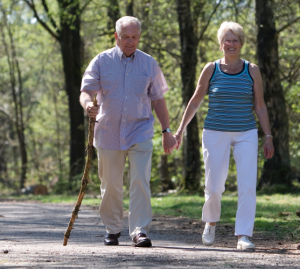 In today’s feature article I’m going to teach you a simple 15-minute exercise you can do anywhere, without any tools or machines.
And the best part is, it’s the most effective exercise I know to prevent heart disease and other age related disease.
Do this exercise three or four times a week and after a month, I promise you to look and feel ten years younger.
Using this exercise actually contradicts to what most doctors recommend. But it’s much more effective too.
Before I teach you this simple exercise, lets look at what the Centers for Disease Control and Prevention (CDC) recommends regarding physical activity.
They recommend what are called low intensity exercises. The rule of thumb is that while doing the exercise you can “talk but not sing” (this guidance is useless for me since I can’t even sing standing still).
What they mean is slow walking, biking less than 10 miles/hour, playing doubles tennis or something like that. Relaxed physical activity that gets your heart pumping a little but won’t get you tired.
And this is far from being nonsense. The CDC bases this guidance on several studies including a recent one that found people who did low intensity exercises were up to 25% less likely to develop coronary artery disease than those who did no physical activities.
With low intensity exercises like these, time is essential. Those who exercised only for 150 minutes per week only had 14% less risk of coronary artery disease. To get up to 25% you need to do low intensity exercises for 700 minutes per week, which is about an hour and a half per day.
The problem is that low intensity exercises like these don’t take on the fundamental aspect of aging. That is as we age, our metabolism tends to slow down and we produce less growth hormones.
Our metabolism rate is the body’s mechanism of converting food into energy. With healthy metabolism you can burn food and fat quickly, old and damaged cells get replaced, you have healthy and good blood flow and you feel strong and healthy.
Children who’re growing have an extremely high metabolism. As we grow older, it naturally slows down. That’s one of the reason you may have been able to eat endlessly when you were younger without gaining weight but as you grew older you experienced that just a small indulgence converts directly into fat.
So when doing exercises, you want to focus on boosting your metabolism.
The other thing that happens as we grow older is a decrease and weakening of muscles. This begins in the early 40s and really picks up in the 50s and 60s. This is true for both the skeletal muscles as well as the heart.
Our muscles play a big role in boosting our metabolism, so that makes it even more important to keep healthy muscle structure.
So how do you build or maintain different muscle types? Resistance training.
A bulked-up body builder gets that way by using extremely heavy weights. He may only work out two or three times a week and only push the heaviest weight up a few times. That’s how he builds muscle mass.
Compare that to a marathon runner who looks like he’s nothing but the skin and bone. Of course he has strong legs but they’re often quite thin. Running a marathon maybe healthy, but it doesn’t build muscles.
Now I don’t want to make you into a body builder (unless that’s your desire) but I highly recommend doing some kind of resistance training in addition to the exercise I’m about to teach you to maintain a healthy muscle structure and metabolism.
So now we’ve covered two types of training. Low intensity training like most doctors recommend (as with distance running) and restraining training (professional level body builder).
But there is a third type of training that in a way combines the benefits from both and adds on it. It’s called high intensity training. On a professional level this would include athletes like sprinters.
If you look at the physics of a sprinter, you’ll notice they’re much more muscular than a marathon runner. Not only the legs but the whole body is in pretty good fit coordination. This is because it take tremendous strength for the sprinter to push himself from the starting line and give it all for a hundred meters or so. Then it’s over.
By stimulating any one type of muscle, you automatically release growth hormones that increase and strengthen every muscle in the body. Growth hormones, of course, also help burn fat, improve cell health and pretty much everything else to reverse aging.
That’s why I present the case that training more like a sprinter than a marathon runner or a body builder is the healthiest way for people of any age.
Your heart is like any other muscle. Working on it with low intensity exercises will do the minimum to make it stronger or healthier. It’s still beneficial but it doesn’t produce maximum results. Adding a little intensity into the training, even if it’s not done for as long of a time, will make it stronger and fitter (like the sprinter’s legs vs. the marathon runner.)
Note: Please don’t take me wrong. I have the utmost respect for people and professionals running the marathon. Especially when I see elderly persons who are still doing it. I’m only speaking from a specific health point of view here. Best health comes from combining both low and high intensity exercises with resistance training.
Instead of going for an hour or hour and a half slow walk, do this exercise for only 15 minutes:
1) Start out with moderate walking for two minutes to warm up. Just enough for your breathing to increase.
2) Now take two minutes of walking or running so hard that after the two minutes you feel that you couldn’t keep up that speed much longer.
3) Now walk very slowly for about four minutes. Your heart rate and breathing should recover but you keep moving so that you won’t cool down.
4) Now repeat number 2 (fast pace), then again number 3 (slow down) and then finish with number 2 (fast pace) again. And you’re done.
If you have any problem walking, you can do this exercise with any type of physical activity such as rowing or biking. The important part is to do three sessions of the highly intense activity and slow down in-between.
Do this exercise for 15 minutes three to four times a week and you’ll benefit much more than doing two hours per day slow walking.
You don’t have to push yourself to the limit the first time you do this exercise. Especially if you have previous heart problems. Feel how far you can push yourself without risking going overboard.
The exercise helps to lower blood pressure, improve cholesterol, metabolism, increase growth hormone productions and lose weight. You’ll experience improvement in any kind of inflammatory disease such as type 2 diabetes and arthritis.
It works by pushing your heart hard and then giving it a break three times in a row.
Interestingly, the blood pressure exercises I developed and have helped thousands of people to drop their blood pressure down to normal work in exactly the opposite direction. They work to give your heart and nerves what I call a “Focused Break”
The “Focused Break” lets your system kind of “reboot” so that the lower blood pressure becomes the norm.
Unlike the exercise I taught you today, the blood pressure exercises are completely effortless. You can do them right away no matter what kind of physical shape you’re in. And you won’t even break a sweat.
I highly recommend using both the metabolism exercise I taught you today as well as our blood pressure exercises to get your health back to ideal.
The same applied to interval weight resistance training. You can do your normal push ups, pull ups, squats etc., however again it will help your testosterone production and your metabolism by mixing it up with back to back sets of intense squats, push ups, pull ups and military over head presses or bench presses with heavier weights without resting in between.
Those short bursts of heaver weight resistance training to the point of exhaustion (meaning that you would find it very difficult to do one more squat, or one more push up, or bench press the barbell one more time etc.
DO NOT try heavy weights or bench presses etc. without someone to spot you. Next time you go for you daily walk, mix it up and walk as fast as you possibly can for up to 5 Min's at a time before going back to your normal pace. Over a period of days or weeks you will find your metabolism changing and your energy levels increasing.
Check with your doctor before starting an interval program, especially using heavier weights.
Dan
LINK to an article to support this:
http://blueheronhealthnews.com/site/?p=5563
EXCERPTS:
Reverse Aging Using This No-Cost Exercise
In today’s feature article I’m going to teach you a simple 15-minute exercise you can do anywhere, without any tools or machines. And the best part is, it’s the most effective exercise I know to prevent heart disease and other age related disease.
Do this exercise three or four times a week and after a month, I promise you to look and feel ten years younger.
Using this exercise actually contradicts to what most doctors recommend. But it’s much more effective too.
Before I teach you this simple exercise, lets look at what the Centers for Disease Control and Prevention (CDC) recommends regarding physical activity.
They recommend what are called low intensity exercises. The rule of thumb is that while doing the exercise you can “talk but not sing” (this guidance is useless for me since I can’t even sing standing still).
What they mean is slow walking, biking less than 10 miles/hour, playing doubles tennis or something like that. Relaxed physical activity that gets your heart pumping a little but won’t get you tired.
And this is far from being nonsense. The CDC bases this guidance on several studies including a recent one that found people who did low intensity exercises were up to 25% less likely to develop coronary artery disease than those who did no physical activities.
With low intensity exercises like these, time is essential. Those who exercised only for 150 minutes per week only had 14% less risk of coronary artery disease. To get up to 25% you need to do low intensity exercises for 700 minutes per week, which is about an hour and a half per day.
The problem is that low intensity exercises like these don’t take on the fundamental aspect of aging. That is as we age, our metabolism tends to slow down and we produce less growth hormones.
Our metabolism rate is the body’s mechanism of converting food into energy. With healthy metabolism you can burn food and fat quickly, old and damaged cells get replaced, you have healthy and good blood flow and you feel strong and healthy.
Children who’re growing have an extremely high metabolism. As we grow older, it naturally slows down. That’s one of the reason you may have been able to eat endlessly when you were younger without gaining weight but as you grew older you experienced that just a small indulgence converts directly into fat.
So when doing exercises, you want to focus on boosting your metabolism.
The other thing that happens as we grow older is a decrease and weakening of muscles. This begins in the early 40s and really picks up in the 50s and 60s. This is true for both the skeletal muscles as well as the heart.
Our muscles play a big role in boosting our metabolism, so that makes it even more important to keep healthy muscle structure.
So how do you build or maintain different muscle types? Resistance training.
A bulked-up body builder gets that way by using extremely heavy weights. He may only work out two or three times a week and only push the heaviest weight up a few times. That’s how he builds muscle mass.
Compare that to a marathon runner who looks like he’s nothing but the skin and bone. Of course he has strong legs but they’re often quite thin. Running a marathon maybe healthy, but it doesn’t build muscles.
Now I don’t want to make you into a body builder (unless that’s your desire) but I highly recommend doing some kind of resistance training in addition to the exercise I’m about to teach you to maintain a healthy muscle structure and metabolism.
So now we’ve covered two types of training. Low intensity training like most doctors recommend (as with distance running) and restraining training (professional level body builder).
But there is a third type of training that in a way combines the benefits from both and adds on it. It’s called high intensity training. On a professional level this would include athletes like sprinters.
If you look at the physics of a sprinter, you’ll notice they’re much more muscular than a marathon runner. Not only the legs but the whole body is in pretty good fit coordination. This is because it take tremendous strength for the sprinter to push himself from the starting line and give it all for a hundred meters or so. Then it’s over.
By stimulating any one type of muscle, you automatically release growth hormones that increase and strengthen every muscle in the body. Growth hormones, of course, also help burn fat, improve cell health and pretty much everything else to reverse aging.
That’s why I present the case that training more like a sprinter than a marathon runner or a body builder is the healthiest way for people of any age.
Your heart is like any other muscle. Working on it with low intensity exercises will do the minimum to make it stronger or healthier. It’s still beneficial but it doesn’t produce maximum results. Adding a little intensity into the training, even if it’s not done for as long of a time, will make it stronger and fitter (like the sprinter’s legs vs. the marathon runner.)
Note: Please don’t take me wrong. I have the utmost respect for people and professionals running the marathon. Especially when I see elderly persons who are still doing it. I’m only speaking from a specific health point of view here. Best health comes from combining both low and high intensity exercises with resistance training.
So without further introduction, I present the best exercise for reversing aging:
Instead of going for an hour or hour and a half slow walk, do this exercise for only 15 minutes:
1) Start out with moderate walking for two minutes to warm up. Just enough for your breathing to increase.
2) Now take two minutes of walking or running so hard that after the two minutes you feel that you couldn’t keep up that speed much longer.
3) Now walk very slowly for about four minutes. Your heart rate and breathing should recover but you keep moving so that you won’t cool down.
4) Now repeat number 2 (fast pace), then again number 3 (slow down) and then finish with number 2 (fast pace) again. And you’re done.
If you have any problem walking, you can do this exercise with any type of physical activity such as rowing or biking. The important part is to do three sessions of the highly intense activity and slow down in-between.
Do this exercise for 15 minutes three to four times a week and you’ll benefit much more than doing two hours per day slow walking.
You don’t have to push yourself to the limit the first time you do this exercise. Especially if you have previous heart problems. Feel how far you can push yourself without risking going overboard.
The exercise helps to lower blood pressure, improve cholesterol, metabolism, increase growth hormone productions and lose weight. You’ll experience improvement in any kind of inflammatory disease such as type 2 diabetes and arthritis.
It works by pushing your heart hard and then giving it a break three times in a row.
Interestingly, the blood pressure exercises I developed and have helped thousands of people to drop their blood pressure down to normal work in exactly the opposite direction. They work to give your heart and nerves what I call a “Focused Break”
The “Focused Break” lets your system kind of “reboot” so that the lower blood pressure becomes the norm.
Unlike the exercise I taught you today, the blood pressure exercises are completely effortless. You can do them right away no matter what kind of physical shape you’re in. And you won’t even break a sweat.
I highly recommend using both the metabolism exercise I taught you today as well as our blood pressure exercises to get your health back to ideal.
Sunday, June 17, 2012
Studies Confirm Role Of Exercise To Control BG Levels
While at the Joslin clinic for my appointment this past Friday, I read a short article in Diabetes Health magazine. It concerned itself with two recent studies emphasizing the value of exercise in controlling your blood glucose levels.
One study conducted by the University of Missouri and published in Medicine and Science in Sports and Exercise, found that blood glucose levels spike during periods of inactivity. This should not surprise anyone as inactivity and poor diet contributed to most of us having Type 2 Diabetes to begin with. The surprising one for me was the second one conducted by the Baker IDI Heart and Diabetes Institute in Australia and published in Diabetes Care, shows that office employees who take short light exercise breaks every 20 minutes enjoy a 30% reduction in blood glucose levels.
Going back to the Missouri study, they monitored the effects of inactivity on blood glucose levels among volunteers who NORMALLY exercised at the the 10,000 steps per day (five miles) program. They wanted to see what effect levels of physical activity have on post meal glucose spikes.
For the first three days these volunteers fitted with monitoring devices, were told to go about their normal routines, usual walks and exercises. At the 10,000 steps per day regimen their BG levels did NOT spike after meals.
They were then asked to cut their daily steps to 2.5 miles (5000 steps) while continuing their normal diet. They also rode whenever possible rather than walk. After just three days of relative inactivity compared to their normal routine, their blood glucose levels spiked an average of 26% over their more active three day period. The blood sugar levels rose slightly higher each day of inactivity. Once back on their 10,000 steps a day routine blood glucose returned to normal limits. The research found that inactivity has a greater effect on blood glucose than even your overall weight or diet.
Concerning quick office breaks, the Australian study found that taking two minute light exercise breaks every twenty minutes allowed office workers to reduce their blood sugar levels by 30%.
I found the article to be of benefit and exercising makes good sense. God gave us ONE mouth and TWO legs, so I suspect He meant for us to do more walking than eating.
(SIDE NOTE)
After being off androgel for about 3 weeks, my blood pressure readings which had jumped into the 195/101 range are now back down to the 120/72 range. I actually find myself with more energy than I had on the Androgel therapy and I am back to doing my workouts with the weights and push ups, abdominal exercises and walking to try and boost my testosterone levels back where they should be. My hope is that by this fall, I will have my T readings back in the 350-400 plus range without any creams or gels.
MY A1C level was also down and my weight was down around 4 lbs.
Dan
Proverbs 23:20-21
Be not among drunkards or among gluttonous eaters of meat, for the drunkard and the glutton will come to poverty, and slumber will clothe them with rags.
Genesis 1:29
And God said, “Behold, I have given you every plant yielding seed that is on the face of all the earth, and every tree with seed in its fruit. You shall have them for food.
One study conducted by the University of Missouri and published in Medicine and Science in Sports and Exercise, found that blood glucose levels spike during periods of inactivity. This should not surprise anyone as inactivity and poor diet contributed to most of us having Type 2 Diabetes to begin with. The surprising one for me was the second one conducted by the Baker IDI Heart and Diabetes Institute in Australia and published in Diabetes Care, shows that office employees who take short light exercise breaks every 20 minutes enjoy a 30% reduction in blood glucose levels.
Going back to the Missouri study, they monitored the effects of inactivity on blood glucose levels among volunteers who NORMALLY exercised at the the 10,000 steps per day (five miles) program. They wanted to see what effect levels of physical activity have on post meal glucose spikes.
For the first three days these volunteers fitted with monitoring devices, were told to go about their normal routines, usual walks and exercises. At the 10,000 steps per day regimen their BG levels did NOT spike after meals.
They were then asked to cut their daily steps to 2.5 miles (5000 steps) while continuing their normal diet. They also rode whenever possible rather than walk. After just three days of relative inactivity compared to their normal routine, their blood glucose levels spiked an average of 26% over their more active three day period. The blood sugar levels rose slightly higher each day of inactivity. Once back on their 10,000 steps a day routine blood glucose returned to normal limits. The research found that inactivity has a greater effect on blood glucose than even your overall weight or diet.
Concerning quick office breaks, the Australian study found that taking two minute light exercise breaks every twenty minutes allowed office workers to reduce their blood sugar levels by 30%.
I found the article to be of benefit and exercising makes good sense. God gave us ONE mouth and TWO legs, so I suspect He meant for us to do more walking than eating.
(SIDE NOTE)
After being off androgel for about 3 weeks, my blood pressure readings which had jumped into the 195/101 range are now back down to the 120/72 range. I actually find myself with more energy than I had on the Androgel therapy and I am back to doing my workouts with the weights and push ups, abdominal exercises and walking to try and boost my testosterone levels back where they should be. My hope is that by this fall, I will have my T readings back in the 350-400 plus range without any creams or gels.
MY A1C level was also down and my weight was down around 4 lbs.
Dan
Proverbs 23:20-21
Be not among drunkards or among gluttonous eaters of meat, for the drunkard and the glutton will come to poverty, and slumber will clothe them with rags.
Genesis 1:29
And God said, “Behold, I have given you every plant yielding seed that is on the face of all the earth, and every tree with seed in its fruit. You shall have them for food.
Subscribe to:
Posts (Atom)